
Reading readiness
Phonics, sound recognition, vocabulary and early word-building support the beginning stages of reading.
A strong school-readiness programme that develops literacy, numeracy, communication, thinking skills and independent classroom habits.
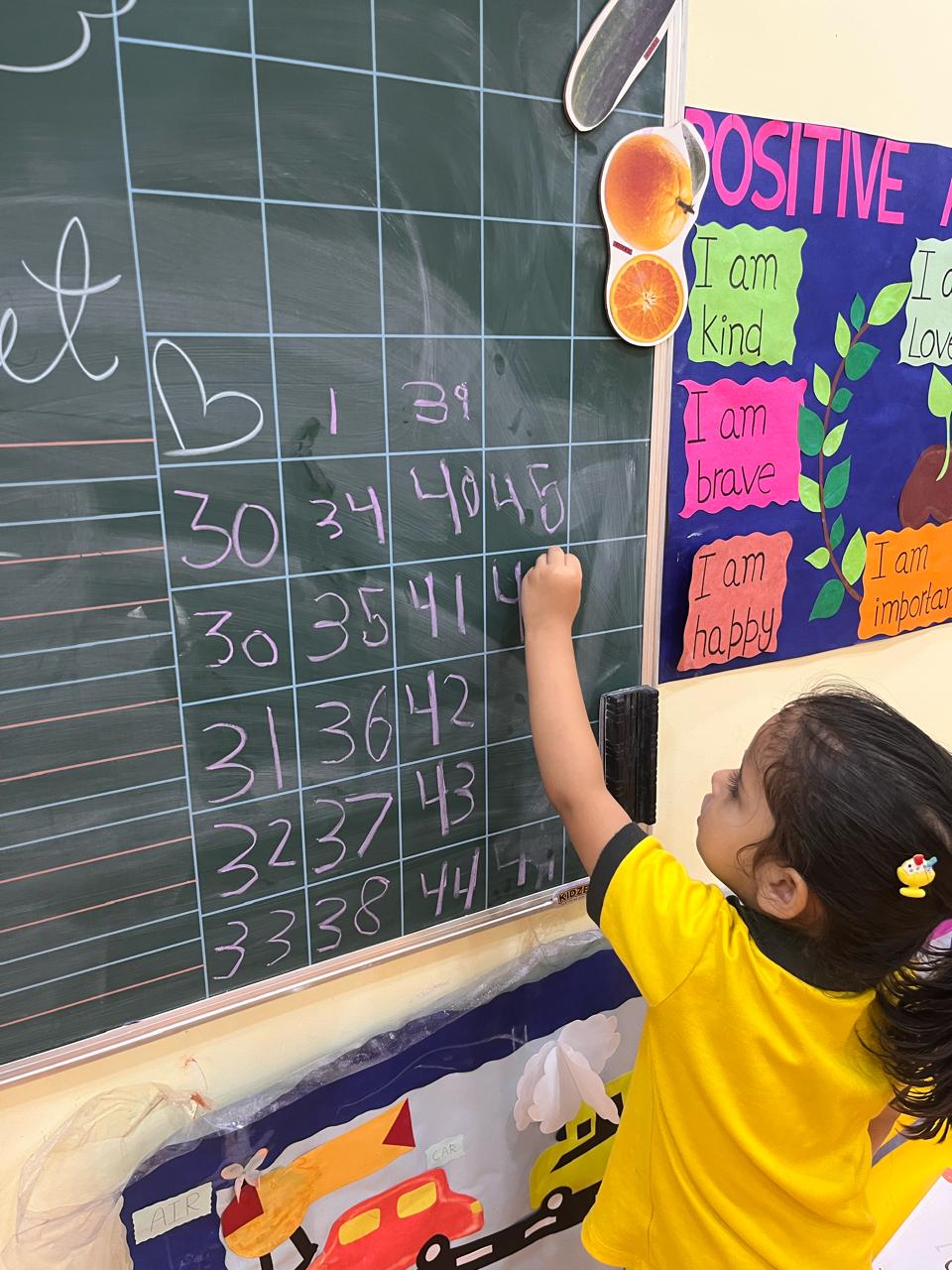
Learning planned for 4–5 years
Activities, expectations and classroom guidance matched to this stage of development.
The Junior KG programme is designed for children between 4 and 5 years of age.
At this stage, children move towards stronger academic readiness while continuing to learn through meaningful activities, conversation, stories, projects and play.
The programme supports phonics, early reading, writing readiness, number concepts, general awareness, problem-solving, communication and confidence.
Children begin connecting ideas across subjects
Junior KG activities help children apply phonics, vocabulary, number understanding and reasoning in practical tasks rather than learning concepts only through repetition.
Phonics, sound recognition, vocabulary and early word-building support the beginning stages of reading.
Fine-motor work, patterns, tracing and guided writing help children develop control and confidence.
Children work with numbers, quantities, patterns, comparisons, sequencing and simple problem-solving.
Presentations, storytelling and classroom discussion encourage children to organise and express ideas.
The sequence can change according to the day’s theme, but children experience a balanced mix of conversation, guided learning, creativity, movement and play.
Children discuss the day, share ideas and build confidence speaking in a group.
Phonics, vocabulary, picture reading, word-building and writing readiness form part of the routine.
Numbers, patterns, sequencing, comparisons and reasoning are explored through practical tasks.
Art, craft, themes and simple projects help children connect ideas across learning areas.
Movement, dance and active experiences support physical confidence and overall development.
Every child develops at a different pace. Teachers focus on participation, confidence and steady improvement rather than comparing one child with another.
Parents can share information about their child’s routine, interests, comfort needs and previous school experience. This helps teachers understand the child more personally.
Supporting progress at home
Simple conversation, reading, play and regular routines at home can reinforce classroom learning without placing unnecessary pressure on the child.
Every child develops differently
Age provides a starting point, while readiness and previous experience help complete the picture.
Junior KG may be suitable when your child is ready to work with early academic concepts while continuing to learn through activity, discussion and exploration.
Your child shows interest in letters, sounds and words
Your child can participate in an activity for a longer period
Your child is beginning to draw, trace or attempt writing
Your child can count familiar objects and recognise basic quantities
Your child can communicate ideas in short conversations
Your child is developing independent classroom habits
A useful point for parents
Junior KG is not only about written work. Communication, reasoning, creativity, confidence and independent participation remain equally important.
The Junior KG programme is designed for children between 4 and 5 years of age.
Yes. The programme develops literacy, numeracy, communication, independence and classroom habits needed for the next stage of schooling.
Yes. Children are introduced to phonics, sound recognition, vocabulary and early word-building in an age-appropriate sequence.
Speak with our team about your child’s current literacy, numeracy, communication and classroom habits before selecting Junior KG.