
Early literacy
Children develop listening, vocabulary, sound awareness, picture reading and early pre-writing readiness.
A lively and structured programme that builds early literacy, numeracy, communication, independence and curiosity through purposeful play.
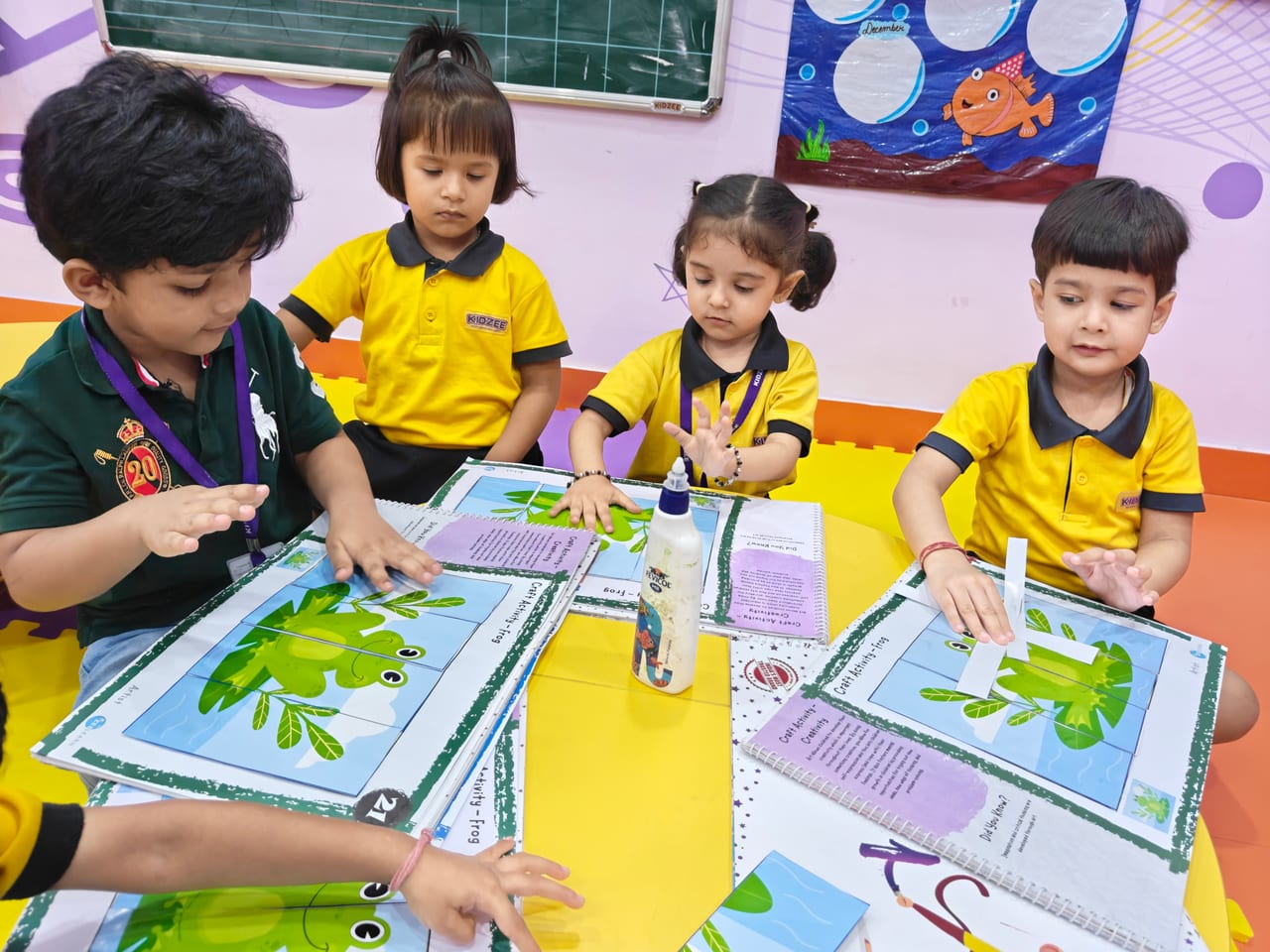
Learning planned for 3–4 years
Activities, expectations and classroom guidance matched to this stage of development.
The Nursery programme is designed for children between 3 and 4 years of age who are ready for more structured classroom participation.
Children begin developing early literacy and numeracy foundations while continuing to learn through stories, games, movement, conversation and hands-on activities.
The programme also supports independence, confidence, attention, social skills and the ability to express ideas in a group.
Concepts are introduced through activity and conversation
Nursery children begin working with sounds, numbers, patterns, vocabulary and pre-writing skills through practical experiences rather than long periods of desk-based work.
Children develop listening, vocabulary, sound awareness, picture reading and early pre-writing readiness.
Counting, sorting, matching, patterns, comparisons and number readiness are introduced through practical activities.
Conversation, storytelling, recitation and show-and-tell help children speak with greater confidence.
Children learn cooperation, turn-taking, classroom responsibility and respectful interaction.
The sequence can change according to the day’s theme, but children experience a balanced mix of conversation, guided learning, creativity, movement and play.
Children begin with greetings, conversation and an introduction to the day’s learning.
Language, numbers, general awareness and early concepts are introduced through engaging activities.
Art, craft, music and role play give children opportunities to express ideas in different ways.
Physical activity supports coordination, confidence, balance and healthy energy release.
Stories and classroom discussion help children build imagination, listening and understanding.
Every child develops at a different pace. Teachers focus on participation, confidence and steady improvement rather than comparing one child with another.
Parents can share information about their child’s routine, interests, comfort needs and previous school experience. This helps teachers understand the child more personally.
Supporting progress at home
Simple conversation, reading, play and regular routines at home can reinforce classroom learning without placing unnecessary pressure on the child.
Every child develops differently
Age provides a starting point, while readiness and previous experience help complete the picture.
Nursery may be the right stage when your child is ready to participate in longer activities and begin exploring early language and number concepts.
Your child is becoming comfortable in a group environment
Your child enjoys stories, rhymes and conversations
Your child can follow simple one-step or two-step instructions
Your child is curious about colours, shapes, numbers and letters
Your child is developing pencil grip and hand control
Your child is ready for more consistent classroom routines
A useful point for parents
Children entering Nursery do not need to know how to read or write. The programme builds the foundations needed for later learning in an age-appropriate way.
The Nursery programme is designed for children between 3 and 4 years of age.
Nursery introduces sound awareness, picture reading, vocabulary, fine-motor work and pre-writing readiness in an age-appropriate way.
Children explore counting, matching, sorting, patterns, comparison and number readiness through practical activities and classroom games.
No. Prior knowledge is not required. Teachers introduce early literacy concepts gradually through stories, sounds, pictures and activities.
Discuss your child’s previous classroom experience, communication and readiness so we can help you understand whether Nursery is the appropriate entry level.